Picture two Singapore business owners, each spending the same S$1,000 a month on Google Ads. One runs an aircon servicing company and gets a steady stream of calls. The other runs a boutique fitness studio and gets thousands of impressions, plenty of clicks, and almost no sign-ups. Same platform, same budget, very different outcomes.
The gap usually comes down to one decision: Google Display Ads vs Search Ads. They look similar inside your Google Ads account, but they reach people at completely different moments. This guide explains how each works, where each one earns its keep, and how to choose for your own business.
Which One Should You Choose?
Choose Search Ads when people already search for what you sell and you want enquiries now. Choose Display Ads when you want to build awareness or bring back past visitors. Most Singapore businesses start with Search, then add Display for remarketing once they have steady website traffic.
Google Display Ads vs Search Ads: The Core Difference
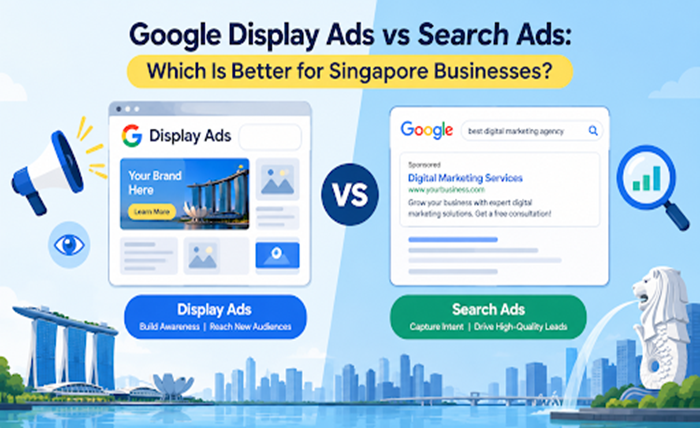
Search Ads respond to intent. Someone types “emergency plumber Singapore” into Google, and your text ad appears above the organic results. They asked, and you answered.
Display Ads interrupt. Your banner shows up on a website, in an app or on YouTube while the person is reading, watching or scrolling. They weren’t looking for you, so the ad has to earn attention.
| Search Ads | Display Ads | |
| Where they appear | Google search results | Websites, apps and YouTube on Google’s Display Network |
| Format | Text | Images, banners, responsive creatives |
| Audience mindset | Actively looking | Browsing, not looking |
| Targeting based on | Keywords | Audiences, interests, placements, past visitors |
| Best for | Leads and enquiries | Awareness and remarketing |
| Typical risk | Competitive, pricier clicks | Clicks that don’t convert |
How Search Ads Work (and When They Win)
You bid on keywords, write a short ad, and Google runs an auction each time someone searches. Your ad rank depends on your bid and on relevance, which Google measures through Quality Score. A well-matched ad and landing page can earn better positions at lower cost than a sloppy one.
Search tends to win when:
- Customers have an urgent need (repairs, legal help, clinic visits, movers)
- You serve a specific area and want to target by location
- Your goal is calls, form fills or WhatsApp enquiries
- You want results within days rather than months
The trade-off is competition. Popular Singapore keywords in sectors like property, education and professional services can get expensive fast, so tight keyword grouping and negative keywords matter a lot.
How Display Ads Work (and When They Win)
Display campaigns run on Google’s Display Network. Instead of keywords, you usually target audiences: people with certain interests, people browsing particular topics, or people who’ve already visited your site.
Display is a good fit when:
- Your product is new and few people search for it by name yet
- You want to stay visible to people who left your website without enquiring
- You sell something visual, like food, interiors, fashion or events
- You’re building brand recognition ahead of a launch or promotion
If you’re curious how this works in practice, Rankpage’s page on google display ads Singapore shows how Display sits alongside Search, YouTube and Performance Max, and what each is best suited for.
One honest caution: Display rarely delivers instant leads on its own. Treat it as a supporting channel unless you have a strong offer and good creatives.
Cost and Budget: What Should You Expect?
Neither format has a fixed price, because both run on auctions. In general, Display clicks tend to cost less than Search clicks, but Display visitors also tend to convert less often. A cheap click that never turns into an enquiry is not cheap.
For reference, Rankpage’s own guidance puts a typical Search campaign click for Singapore businesses somewhere between SGD 1.50 and SGD 6.00, though this varies a lot by industry and keyword.
A more useful number than cost per click is cost per lead. Track that from day one, using conversion tracking for calls, form submissions and WhatsApp clicks. Without it, you’re guessing which ad type is actually working.
Which Fits Your Business? Three Common Scenarios
A service business (plumbing, cleaning, legal, clinics): Start with Search. Your customers search when they have a problem, and you want to be the answer.
An online shop with a repeat-purchase product: Combine them. Use Search for shoppers comparing options, and Display to remind people who viewed a product and left.
A new brand nobody has heard of: Display or YouTube can build familiarity, but expect a slower payback. Pair it with Search on your brand name so people who do look you up find you easily.
Common Mistakes to Avoid
- Judging Display by Search standards: Display often assists a sale rather than closing it. Look at assisted conversions, not just last-click results.
- Sending traffic to the homepage: Ads work harder when they land on a page that matches the promise in the ad.
- Skipping negative keywords: Without them, a Search budget leaks into irrelevant queries.
- Letting Display run everywhere: Review placement reports and exclude sites or apps that burn budget without results.
- Ignoring mobile: A large share of Singapore browsing happens on phones, so check that your landing page loads fast and the call button works.
Can You Use Both Together?
Yes, and many businesses should. Think of it as two jobs. Search captures people who are ready to act. Display keeps your business in front of people who showed interest but didn’t act yet.
A simple setup looks like this: run Search first, collect website visitors into a remarketing audience, then launch a small Display remarketing campaign aimed only at that audience. It costs less than broad Display and tends to be easier to measure.
How to Decide: A Simple 4-Step Check
- Name your goal: Leads this month point to Search. Awareness or retargeting points to Display.
- Check search demand: Look up your core keywords in Google Keyword Planner. If few people search for them, Search alone won’t scale.
- Set a test budget: Give each campaign enough time and spend to produce usable data before judging it.
- Measure cost per lead: Compare results on what matters to your bottom line, then shift budget toward what works.
FAQ
Which is better, Google Display Ads or Search Ads?
Neither is better in every case. Search Ads usually perform better for direct leads because they reach people already looking for your service. Display Ads work better for awareness and remarketing. Your goal, product and budget should decide the mix.
Are Google Display Ads cheaper than Search Ads?
Per click, Display is often cheaper. But Display visitors usually convert at a lower rate, so cost per lead can end up similar or higher. Compare cost per lead, not cost per click, before deciding where to spend.
Where do Google Display Ads appear?
They appear across Google’s Display Network, which includes websites, mobile apps and YouTube. Advertisers can choose audiences, topics or specific placements, and exclude sites that aren’t a good fit.
Should a small business in Singapore start with Search or Display?
Most small businesses should start with Search, especially if customers already look for their services online. Once the website has steady traffic, adding a modest Display remarketing campaign is a sensible next step.
How long does it take to see results from Google Ads?
Search campaigns can bring traffic within a day of launch. Proper optimisation usually takes a few weeks to a few months of data. Display campaigns often need longer, since their value shows up through repeat exposure.
So, Which One Should You Pick?
The Google Display Ads vs Search Ads question isn’t really a contest. Search is the safer first move when you want enquiries soon. Display is a strong second layer for awareness and remarketing once you have traffic worth following up.
Start with one clear goal, track cost per lead, and expand from there. If you’d like help working out the right mix for your business, Rankpage’s Google Ads team is happy to talk it through with you.