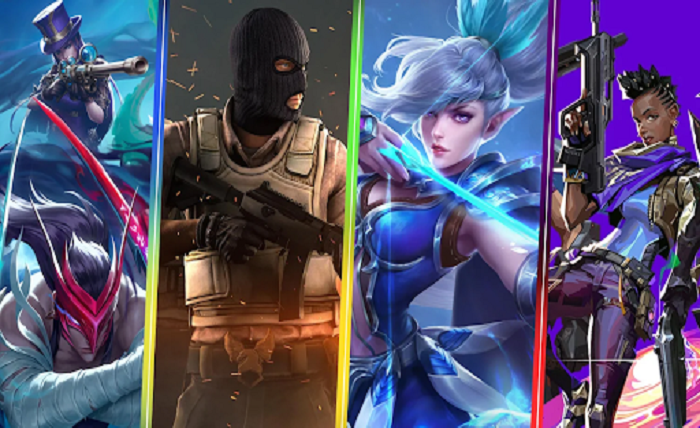
Esports is entering a new phase. Prize pools are stabilizing, leagues are becoming more structured, and publishers are taking tighter control over competitive ecosystems. At the same time, audience numbers continue to grow, especially around the biggest events of the year.
In 2025, the question is no longer whether esports will survive. The real question is which games will stay at the top — and which ones will slowly fade away.
This is a look at the top esports games right now, based on tournament activity, viewership trends, and how the competitive scene is evolving.
The Current State of Esports in 2025
Compared to previous years, esports in 2025 feels more mature. There are fewer risky experiments and more long-term planning. Publishers focus on sustainable leagues instead of one-off events with inflated prize pools.
Key trends shaping esports this year:
- Fewer but higher-quality tournaments
- Stronger regional leagues
- More focus on broadcast quality
- Clearer paths from amateur to pro
Only games that fit into this structure remain relevant at the top level.
Why Analytics and Predictions Are Growing in Esports
As competition becomes tighter, fans look deeper into stats and form. Match analysis is now a major part of esports coverage.
This also explains the growing interest in platforms related to online esports betting, where understanding team performance, maps, and recent results becomes essential.
Esports is no longer watched casually. It is studied.
Counter-Strike 2 Remains the Backbone of Esports
CS2 continues to be one of the most reliable esports titles. The transition from CS:GO was not perfect, but by 2025 the competitive scene has stabilized.
Major tournaments still set the standard for production and viewership. Teams from Europe, CIS, and Asia dominate headlines, and roster changes are closely followed by fans and analysts.
What keeps CS2 strong right now:
- Clear competitive rules
- Stable meta
- High individual skill expression
CS2 doesn’t rely on flashy updates. Its strength is consistency.
League of Legends and the Power of Structure
League of Legends remains unmatched in terms of seasonal structure. Regional leagues feed directly into international events, keeping fans engaged all year.
In 2025, Riot Games continues to refine the ecosystem rather than reinvent it. Changes are careful and measured.
Why League of Legends stays on top:
- Strong storytelling around teams
- Reliable schedule
- Massive Worlds event
Even during slower seasons, LoL maintains high engagement.
Dota 2: Smaller Scene, Higher Stakes
Dota 2’s competitive scene is more compact now, but the level of play remains extremely high. Fewer tournaments mean each event carries more weight.
The International is still the most prestigious trophy in Dota. Winning it defines careers.
Why Dota 2 still matters:
- Deep strategic gameplay
- Loyal fan base
- High-risk, high-reward matches
Dota may not dominate headlines weekly, but when it does, the entire esports world pays attention.
Valorant’s Continued Expansion
Valorant keeps gaining ground in 2025. Riot’s long-term vision is clearly paying off.
International events attract strong viewership, and regional leagues are becoming more competitive. Teams are investing heavily in infrastructure, coaching, and analytics.
What fuels Valorant’s growth:
- Consistent updates
- Clear competitive identity
- Strong appeal to new audiences
Valorant is no longer “the new game.” It’s a permanent part of the esports elite.
Mobile Esports Are No Longer Secondary
Mobile esports are now a core part of the industry. PUBG Mobile and Mobile Legends tournaments fill arenas and attract millions of viewers online.
In some regions, mobile esports outperform PC titles.
Why mobile esports keep growing:
- Accessibility
- Huge regional leagues
- Strong sponsor interest
Ignoring mobile esports in 2025 means missing a major part of the global picture.
Biggest Tournaments Shaping the Esports Calendar
Top esports games are defined by their biggest events.
Key tournaments in 2025 include:
- CS Majors
- League of Legends World Championship
- The International
- Valorant Champions
- Major mobile esports championships
These events drive viewership peaks and set narratives for the entire season.
Star Players and the New Era of Esports Icons
Modern esports stars are more than just players. They are brands.
Veterans continue to lead, but younger talent is rising fast. Social media presence now matters almost as much as in-game performance.
Why players matter more than ever:
- Fans follow individuals, not just teams
- Personal rivalries increase engagement
- Player transfers drive headlines
This shift is changing how esports stories are told.
What Games Are at Risk of Falling Behind
Not every competitive game survives long-term.
Games struggle when:
- Developer support slows
- Balance issues remain unresolved
- Tournament schedules become inconsistent
In 2025, only games with strong publisher backing and active communities remain at the top.
What the Future Looks Like for Top Esports Games
The future of esports will likely be more selective.
Expect:
- Fewer top-tier games
- Stronger leagues
- Better player protections
- Higher broadcast standards
The industry is moving from rapid expansion to long-term stability.
How Publisher Decisions Shape Top Esports Games
One of the biggest changes in esports over the past few years is the growing influence of game publishers. In 2025, developers no longer just create games — they actively control how esports around those games function.
Riot Games is the clearest example. Both League of Legends and Valorant operate within tightly managed ecosystems. Tournament formats, team participation, and even broadcast rules are controlled centrally. This creates stability, but also limits independent organizers.
Valve takes a different approach with CS2 and Dota 2. Instead of full control, Valve sets the foundation and allows third-party tournament organizers to build the scene. This leads to more variety, but also more risk.
Which model is better is still debated. What’s clear is that games with strong, consistent publisher involvement are far more likely to stay among the top esports titles long-term.
Regional Power Shifts in Competitive Gaming
Esports in 2025 is no longer dominated by one region.
Europe remains strong in CS2 and League of Legends.
Asia continues to lead in League of Legends and mobile esports.
North America is rebuilding, focusing more on long-term development than instant success.
Emerging regions are becoming more competitive every year.
This regional balance makes international tournaments more unpredictable. Upsets are more common, and new teams regularly break into the spotlight.
For fans, this adds tension and relevance to global events. For teams, it raises the level of preparation required to stay competitive.
The Role of Technology in Modern Esports
Technology plays a bigger role than ever in how top esports games are played and watched.
Teams now rely heavily on:
- Performance analytics
- Demo and replay analysis
- Reaction-time tracking
- AI-assisted coaching tools
Broadcasts have also evolved. Live stats, player cams, real-time replays, and advanced graphics make esports easier to follow for casual viewers.
These improvements help esports reach wider audiences and make competitive games feel closer to traditional sports broadcasts.
Why Viewership Numbers Matter More Than Prize Pools
For a long time, prize pools were used as the main indicator of a game’s success. That mindset is changing.
In 2025, viewership is the real currency.
High viewership means:
- More sponsorship interest
- Better media deals
- Long-term sustainability
Some games with smaller prize pools outperform others with bigger rewards simply because more people watch them consistently.
This shift explains why structured leagues with regular broadcasts often perform better than one-off tournaments with massive payouts.
Final Thoughts
The top esports games in 2025 earned their position through consistency, structure, and strong competitive design. CS2, League of Legends, Dota 2, Valorant, and major mobile titles define the current era of esports.
They are not just popular games. They are the foundation of modern competitive gaming — and the benchmark for everything that comes next.